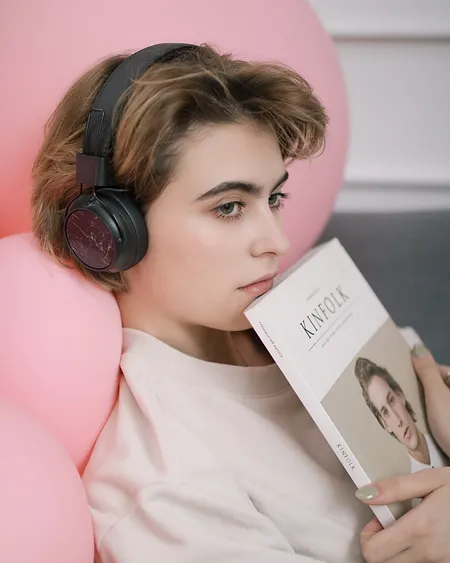
Studies suggest that music tuned to 432 Hz produces a measurably lower heart rate than standard 440 Hz, and millions of listeners describe it as warmer, calmer, and easier on the mind. For Yoselin Sanchez, who has lived with chronic pain from cervical scoliosis since birth, 432 Hz house music isn’t a wellness trend — it’s a daily tool that helps her stay focused, present, and calm while working in telehealth. “Music is medicine. Sound is medicine,” she says. Whether you’re managing stress, chasing better sleep, or just looking for something that feels different, 432 Hz might be the frequency your body has been missing. 🎧
The Science Behind 432 Hz Music: What the Research Actually Says
You’ve probably seen 432 Hz music everywhere lately — YouTube channels with millions of views, Spotify playlists marketed as “healing frequencies,” wellness influencers swearing by it for sleep, focus, and stress relief. But is any of it real? Or is this just another corner of the wellness internet where science goes to die?
The answer, perhaps surprisingly, is somewhere in the middle. And the actual story is more interesting than either the true believers or the debunkers want to admit.
First, a little history
The note A above middle C — the reference pitch that all other instruments tune to — currently vibrates at 440 Hz. But that wasn’t always the case, and getting there wasn’t simple.
Before the 20th century, there was no universal pitch standard. Orchestras tuned to different frequencies ranging roughly from A=380 Hz to A=470 Hz, depending on the period, country, and local tradition. The French government stepped in with a standardized pitch of A=435 Hz in 1859, which was widely adopted across Europe for several decades. The modern standard of A=440 Hz was officially recommended at an international conference in London in 1939, and later confirmed by the International Organization for Standardization (ISO 16) in 1955.
The push toward a lower standard actually had a practical champion in the composer Giuseppe Verdi, who famously wrote that he wished a single tuning fork be adopted “equal to 432 vibrations.” His concern wasn’t mystical — it was practical. Pitch had been creeping upward over decades, forcing opera singers to hit notes at higher frequencies than composers had intended, causing vocal strain, fatigue, and damage.
So 432 Hz didn’t emerge from ancient temples or sacred geometry. It came from a 19th-century Italian opera composer worried about his singers blowing out their voices.
The Nazi conspiracy theory (and why it’s nonsense)
Before going any further, one myth needs to be put down directly. A widely shared internet claim holds that the Nazis deliberately pushed the 440 Hz standard to make people anxious and aggressive. Multiple experts, including historians of Nazi Germany, have dismissed these allegations as unfounded. The 440 Hz standard was developed through mundane international bureaucratic processes, not psychological warfare. In fact, the Stuttgart Conference of 1834 — over a century before World War II — had already adopted A=440 Hz as a recommended standard based on physicist Johann Scheibler’s research with his Tonometer. The Nazi angle is a myth. Moving on.
So what does the science actually say?
Here’s where it gets genuinely interesting. A small but growing body of peer-reviewed research suggests that music tuned to 432 Hz produces measurable physiological differences compared to the same music at 440 Hz — and the differences lean toward calm.
A double-blind cross-over pilot study published in a peer-reviewed journal used 33 volunteers who listened to the same movie soundtracks tuned to 440 Hz on one day and 432 Hz on another. The study measured vital parameters including blood pressure, heart rate, respiratory rate, and oxygen saturation, along with perceptions of fatigue, stress, and general satisfaction. Participants who listened to the 432 Hz version showed slightly decreased heart rate and blood pressure. It’s worth noting the study was limited by a small sample size and non-randomization, so it can’t be treated as definitive — but the direction of the finding is consistent with other research.
A separate double-blind cross-over pilot study looked at sleep quality in patients with spinal cord injuries, comparing music tuned to 440 Hz versus 432 Hz listened to for 30 minutes daily. The 432 Hz group showed improvements in sleep quality and perceived stress scores.
On the brain side, a study published in the Journal of Family Medicine and Primary Care used EEG recordings to measure brainwave patterns in people listening to 432 Hz music during daytime naps, finding a highly significant increase in alpha wave activity — the type of brainwave associated with calm, relaxed wakefulness. The increase was especially pronounced in the right frontal and central regions of the brain, with statistical significance so strong that researchers considered it unlikely to be a fluke.
An EEG study comparing listeners’ brain responses to 432 Hz versus 440 Hz also recorded stronger activity in the left prefrontal cortex alpha waves during the 432 Hz condition, which researchers associated with an increased level of positive reception of the content.
A 2023 study out of China found significantly lower systolic blood pressure after participants listened to jazz and classical music tuned to 432 Hz, with the 440 Hz group not showing the same physiological benefit. These findings were reinforced by a sentiment analysis of over 10,000 YouTube comments, where 71.5% of listeners expressed positive emotional responses to 432 Hz music.
What the skeptics get right
Honest coverage of 432 Hz has to acknowledge the legitimate criticisms. The studies cited above are mostly small, mostly Italian (which is notable since Italy has been home to most of the formal research), and often not fully randomized. Critics point out that it’s difficult to separate true frequency effects from expectancy or general relaxation responses — meaning people may feel calmer partly because they expect to.
There’s also the broader point that modern research suggests the effects of sound on wellbeing are less about any single special frequency and more about how we perceive and interpret sound. In other words, music you find beautiful and calming will calm you down, regardless of whether it’s tuned to 432, 440, or 443 Hz.
And then there are the wilder metaphysical claims — that 432 Hz is the “natural frequency of the universe,” that it resonates with the Schumann resonance of the Earth, that it unlocks DNA, that it raises consciousness. None of this has scientific support. These claims attach themselves to the legitimate physiological research like barnacles, making it harder to take the real findings seriously.
The bottom line
The honest summary is this: there is real, peer-reviewed evidence that music tuned to 432 Hz produces measurable physiological effects — lower heart rate, lower blood pressure, increased alpha brain waves, reduced cortisol. The effect sizes are modest, the studies are small, and more large-scale research is needed. The cortisol and heart rate results are among the most robust findings, while effects on sleep and blood pressure still need further confirmation.
What it isn’t is magic. It isn’t ancient wisdom. It isn’t suppressed by shadowy forces. It’s a pitch that sits about 31 cents below modern concert standard, and there’s accumulating evidence that some people’s nervous systems respond to it with measurably more calm.
For someone like Yoselin Sanchez, who lives with chronic pain from cervical scoliosis and uses 432 Hz house music as a daily tool to stay focused and ease discomfort while working, the research gives her something to point to beyond personal preference. “Music is medicine. Sound is medicine,” she says. The science, limited as it is, doesn’t disagree.
If you’re curious, the barrier to trying it is essentially zero. Hundreds of hours of 432 Hz music are free on YouTube, and some audio software lets you pitch-shift any track down by 31 cents. The worst case is you spend 20 minutes listening to music and feel nothing different. The best case is your body responds the way it does in the studies.
That’s a pretty good risk-reward ratio.
Kaelen Vox uses 432 Hz music in most of her music. You can find her everywhere!
- Spotify: https://open.spotify.com/artist/0Nogg…
- Apple Music: / kaelen-vox
- Amazon Music: https://music.amazon.com/artists/B0G1…
- Deezer: https://www.deezer.com/us/artist/3558…
- YouTube Music: / @kaelenvox